Case study
How Smart Repairs and Troubleshooting Saved Irrigation District $2.5 Million
The Primary Challenge
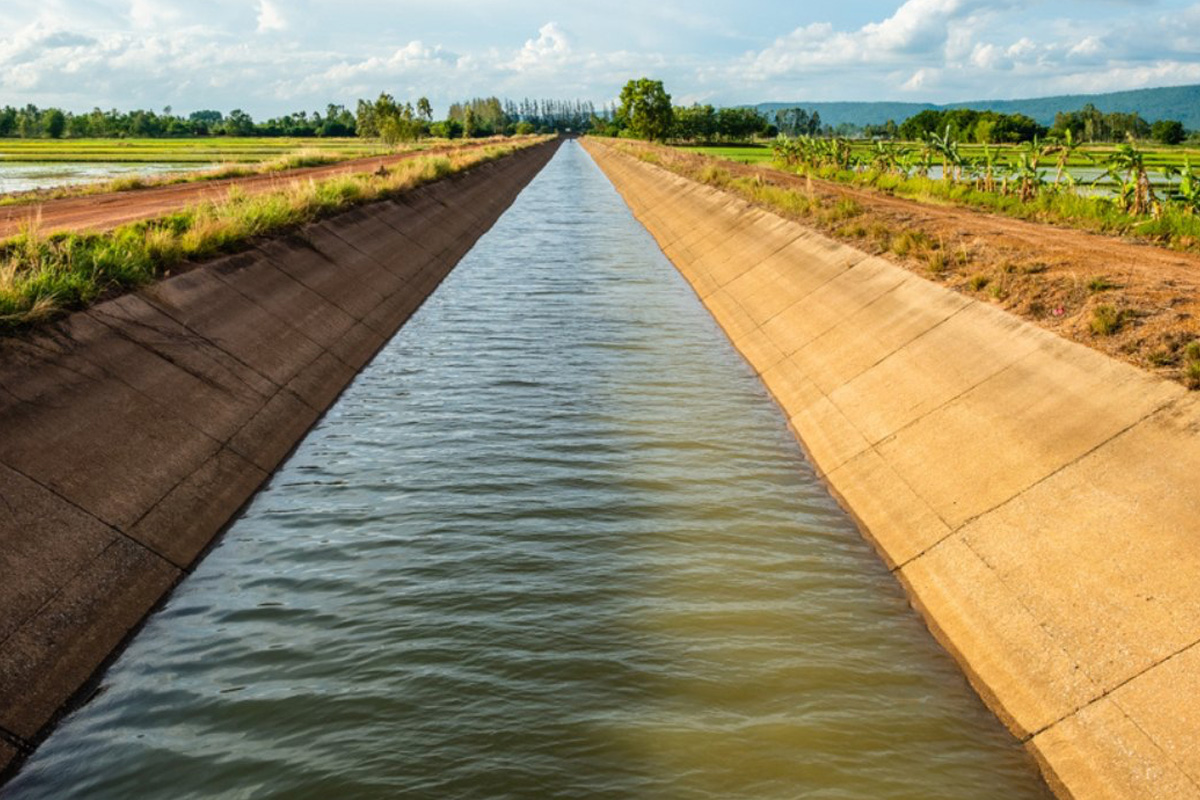
In Washington State, the Quincy-Columbia Basin Irrigation District (QCBID) is vital to delivering water across 680,000 acres of farmland that supports $2.6 billion in crop production annually1 — including many of the potatoes behind fast food’s most famous fries. In addition, QCBID infrastructure helps power millions of homes, prevent flooding and maintain balanced recreational areas and wildlife ecosystems. If pump equipment fails, it can be detrimental to the local agricultural economy and environment.
During a routine maintenance check at one of several pumping stations, QCBID team members noticed excessive vibration in a 2,300-volt, 1,500 horsepower electric motor driving a pump that had been in service since the 1960s. Suspecting a worn bearing needed replacement, the team contacted H&N Electric, a Timken Power systems company, for assistance.
The motor was sent, along with spare bearings, to H&N Electric’s Service Center in Pasco, Wash., for quick-turn service. Once the spare bearings were cleaned, inspected and installed, the motor was put back into service but not operated for the remainder of the active growing season. When the pumping station started up again the following Spring, QCBID operators reported a loud noise described as a “humpback whale” sound. H&N experts went onsite to investigate.
The Solution
Still suspecting a bearing issue, the H&N team opted to return the bearings to H&N Electric’s service center for modifications. There, manufacturing experts adjusted the bearing pads to improve oil flow and lubrication. Though the motor ran successfully for the rest of the season after being reinstalled, shaking persisted. The QCBID and H&N Electric teams agreed to a broader intervention: sending the entire motor and shaft extension for in-depth diagnostics at the service center.
According to Jon Schliep, H&N Electric’s Western regional motor sales manager, this deep dive into the broader system revealed issues beyond the bearings.
“Our team found the lower journal out of round, the thrust runner was compromised and the shaft extension had to be machined true,” he said. “It became clear that repairs needed to be handled across the entire system, and tested along with the pump, to ensure that everything would run smoothly.”
In the service center, the technicians measured the motor, pump shaft and pump run out as a complete unit. The team discovered that while the motor and the pump individually were balanced and true, the pump shaft extension had multiple offset centers, causing the shaft to shake. Thanks to in-house machining capabilities, the H&N team custom-machined a new pump shaft and extension to align the entire drivetrain and eliminate the shaking problem, which in turn solved the noise issue in the motor.
“The operators couldn’t tell if it was running until they got up on the motor deck,” Schliep added. “Before, they could hear and feel the vibration from the control room.”

Key Results
What began as a simple bearing repair evolved into a complete system overhaul. H&N Electric’s team provided not just component fixes, but root-cause diagnostics and manufacturing solutions — solving a complex challenge through collaboration and technical depth.
“We never said, ‘That’s not our issue,’” Schliep noted. “It was a team effort, and communication with QCBID remained constant.”
By choosing repair over full replacement, QCBID avoided a $2.5 million system upgrade. The collaborative solution delivered reliable performance at a fraction of the cost, saving costs that the local farmers and irrigators who own QCBID can reinvest into future irrigation projects.
1. Source: Report: $2.66 Billion Annual Crop Value of Columbia Basin Project — South Columbia Basin Irrigation District